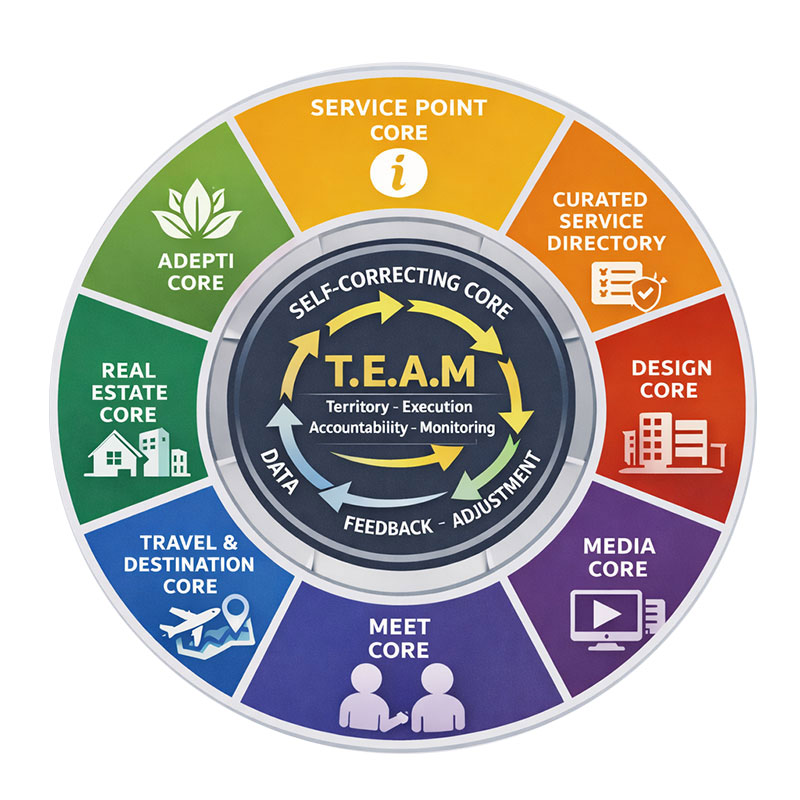






OP Franchise
Structural Framework
OP Franchise operates as a structural framework, not as a sales model or opportunity.
What is shown here defines how OP works, not what is being offered.
OP FRANCHISE, STRUCTURAL OVERVIEW
OP is not a service business.
OP is infrastructure.
This framework outlines the structural principles under which OP operates country and regional franchises.
It is not an offer.
It is not a promise.
It defines how OP works.
What OP Controls
- all systems and technology
- websites, applications, and platforms
- payment flows and transaction logic
- global sales channels
- data, analytics, and reporting
- system development and updates
What the Franchisee Controls
- local market execution
- local partners
- compliance with local law
- local operations
What This Is Not
- not a startup opportunity
- not a marketplace
- not a service reseller
- not a community model
Territory
- country or defined region
- exclusivity is conditional
- performance-based
Financial Structure (Indicative)
OP operates under a license-based model, including:
- an entry license fee
- a monthly infrastructure fee
- a transaction-based commission
- Exact figures are discussed only after mutual interest is established.
Who This Is For
- operators, not investors
- people who understand structure
- long-term builders
What Exists Behind This Framework
(Prepared. Not Publicly Disclosed.)
The OP franchise operates within a broader, fully prepared structural system.
The following documents and frameworks exist and are used selectively as discussions progress.
- OP Master Franchise Agreement
- Territory & Exclusivity Framework
- Pilot-Phase Financial Structure
- Brand & Usage Enforcement Rules
- OP Value Map – Core Business Architecture
- OnePartner Core
- Curated Service Directory Core
- Design Core
- Media Core
- Travel & Destination Core
- Real Estate Core
- Adepti Core
- Meet Core
- OP Operating System
- Self-Correcting Core Logic
- T.E.A.M – Local Operational Control Units
- Central Monitoring & Enforcement
- Anti-Dilution & Structural Drift Protection
- Local Partner Acceptance Framework
- Supervisor & Quality Control Model
- Data-Driven Performance Monitoring
- Centralized Adjustment & Intervention Logic
- Controlled Disclosure Protocol
- Non-Distributable Internal Documentation
- Step-Based Access to Deeper Material
Operative system